

Canadian Oral Steroids in Winnipeg, Manitoba
Proudly Serving Canadians with Anabolics Throughout Winnipeg, Manitoba

Fast Shipping

Discreet Delivery

Affordable Canadian Steroids
Find Anabolic Steroids Near You in Winnipeg, Manitoba
Canadian Injectable Anabolic Steroids in Winnipeg, Manitoba
Proudly Serving Canadians with Anabolic Steroids Throughout Winnipeg, Manitoba
Fast Shipping
Discreet Delivery
Affordable Canadian Steroids
Canadian Peptides Online in Winnipeg, Manitoba, Canada. HGH Uses & Side Effects
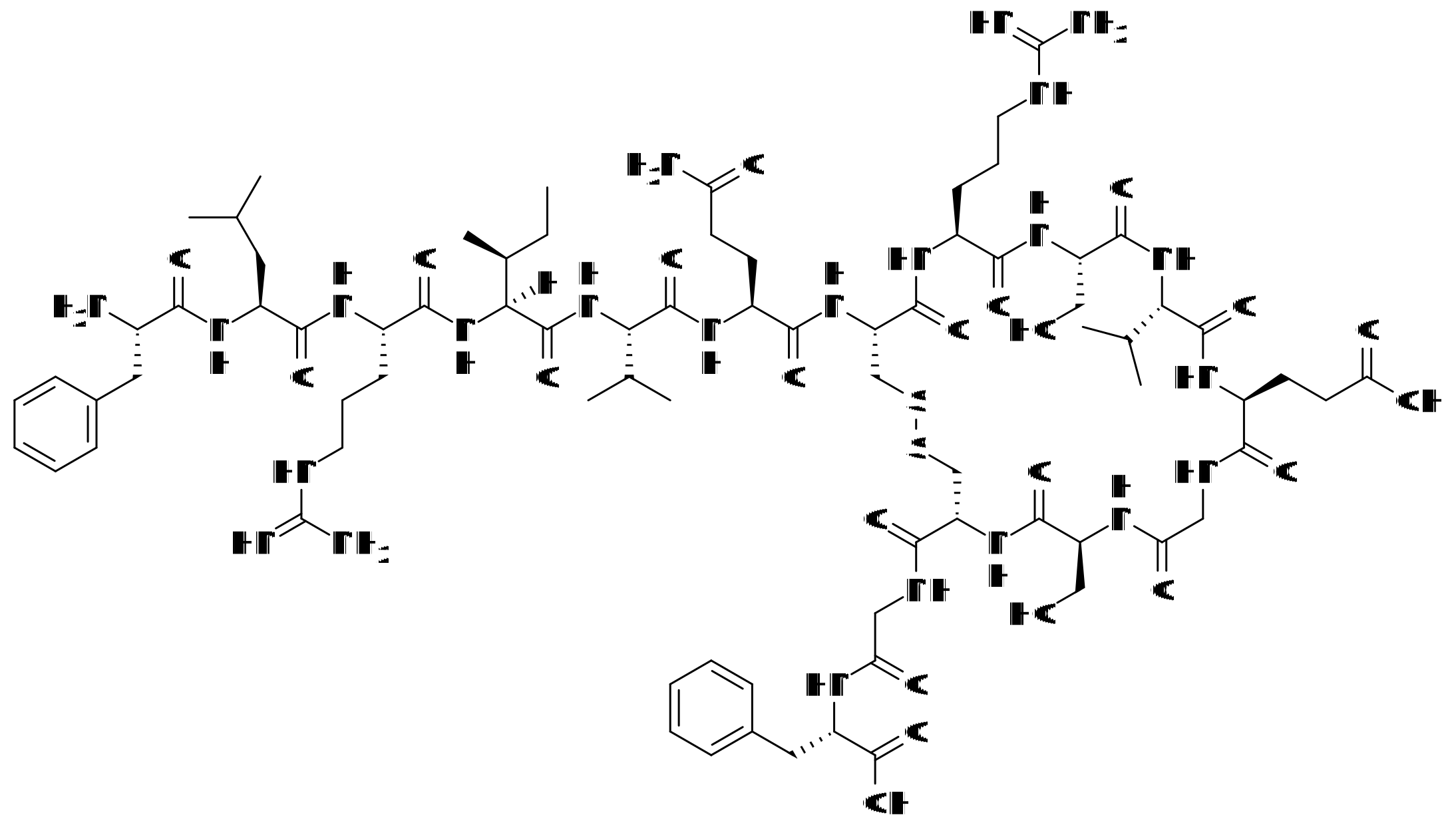
In the fitness communities of Winnipeg from the training facilities in St. James to the gyms of Transcona and Fort Garry Human Growth Hormone (HGH) is often regarded as the “gold standard” for recovery and anti-aging. Unlike anabolic steroids, which are derivatives of testosterone, HGH is a peptide hormone consisting of a specific 191-amino acid sequence that is naturally produced by the pituitary gland.
Why HGH? Uses and Mechanisms
Biologically, HGH functions differently than steroid esters. It does not bind to androgen receptors; instead, it acts as a master signaling molecule. Once in the bloodstream, it stimulates the liver to secrete Insulin-like Growth Factor 1 (IGF-1). This downstream mechanism is responsible for the majority of its anabolic and regenerative effects.
- Medical Applications: In a clinical setting, synthetic Somatotropin (HGH) is prescribed to treat children with growth failure, Turner syndrome, or adults with severe growth hormone deficiency. It is essential for maintaining bone density, metabolic health, and tissue repair.
- Physique & Performance: For athletes in Manitoba, HGH is rarely used for “bulk” alone. Instead, it is the foundation of “recomposition” cycles. It is prized for its unique ability to stimulate lipolysis (fat burning) while simultaneously promoting connective tissue repair (tendons and ligaments) and improving skin elasticity—benefits that standard steroids cannot provide.
Potential Side Effects
While HGH avoids the hormonal shutdown and androgenic side effects associated with steroids, it carries its own distinct risks, particularly at supraphysiological doses:
- Water Retention & Neuropathy: HGH often causes significant fluid retention in the extremities. This can lead to Carpal Tunnel Syndrome, characterized by numbness or tingling in the hands due to nerve compression.
- Insulin Resistance: HGH antagonizes the action of insulin. Chronic misuse can elevate blood glucose levels, leading to insulin resistance and increasing the risk of Type 2 Diabetes if diet is not strictly monitored.
- Acromegaly: Long-term abuse can lead to the thickening of bone tissue, specifically in the jaw, brow, and hands.
The Winnipeg Context
For residents of Winnipeg, logistics are a primary concern. HGH is biologically fragile and often requires refrigeration (the “cold chain”) to maintain potency. Importing these sensitive compounds across international borders is risky due to shipping delays and seizure by the CBSA. Consequently, the local market relies heavily on domestic “Canadian” sources. Sourcing locally ensures that products arrive quickly in cities like Brandon or Steinbach without degrading in transit or passing through customs.
What Is HGH
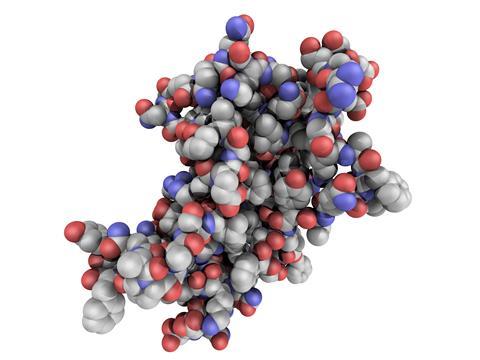
Human Growth Hormone, medically termed Somatotropin, is a complex protein hormone synthesized through recombinant DNA technology. Unlike anabolic steroids which are derivatives of cholesterol, HGH is distinguished by its specific molecular architecture—a single-chain polypeptide consisting of 191 amino acids in a precise sequence—which mimics the natural hormone produced by the human pituitary gland.
This biological design allows HGH to function as a “master regulator” of cell regeneration. Crucially, unlike testosterone esters that bind to androgen receptors, HGH operates primarily by signaling the liver to secrete Insulin-like Growth Factor 1 (IGF-1). This unique mechanism drives hyperplasia (the splitting and creation of new muscle cells) rather than just hypertrophy (the enlargement of existing cells). Furthermore, it possesses a distinct metabolic property: it actively mobilizes stored body fat for energy, allowing for simultaneous lean tissue accretion and significant fat loss—a “recomposition” effect that steroids alone rarely achieve.
The bio-engineering of synthetic HGH provides several functional characteristics in regenerative and physique contexts, including:
191-Amino Acid Sequence: The “gold standard” structure that is identical to endogenous human growth hormone, ensuring receptor compatibility and minimizing immune response.
IGF-1 Mediation: The primary anabolic pathway, which promotes systemic recovery, cartilage repair, and collagen synthesis throughout the body.
Lipolytic Action: Directly stimulates the hydrolysis of triglycerides in adipose tissue, making it a potent fat-burning agent.
Short Active Life: A half-life of less than 20 minutes in the blood, necessitating frequent (often daily) subcutaneous injections to mimic the body’s natural pulsatile release.
Due to these characteristics, Somatotropin was originally developed in medical settings to treat childhood growth failure and pituitary dwarfism. Unlike androgenic agents used for aggression and raw strength, HGH is primarily a “long-game” compound designed to alter body composition over months, improve skin elasticity, and heal connective tissue that steroids cannot reach.
While HGH is a powerful biological agent, it acts on metabolic pathways that carry distinct risks. Users must manage insulin resistance (as HGH raises blood sugar), water retention in the extremities (often leading to Carpal Tunnel Syndrome), and the risk of acromegaly (abnormal bone growth) at excessive doses. Its usage is strictly regulated, and unlike steroids, it requires careful handling (often refrigeration) to prevent the fragile peptide chain from degrading.