

100% Secure Checkout Secure
Third-Party HPLC Tested HPLC Tested
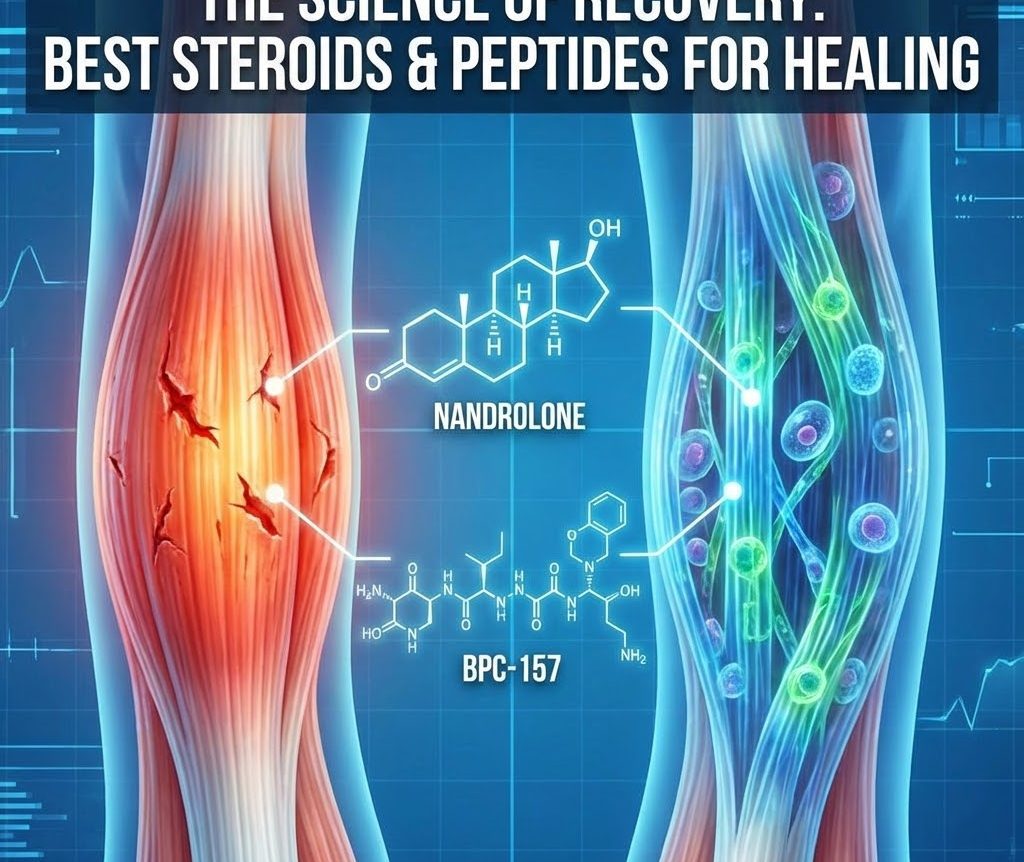
Medical illustration showing damaged muscle tissue being repaired, overlaid with chemical structures of Nandrolone and BPC-157.

Best Steroids for Healing

In the high-impact world of sports and bodybuilding, injury is not a matter of “if,” but “when.” For decades, the conversation around performance-enhancing drugs (PEDs) focused almost exclusively on muscle hypertrophy (growth) and strength. However, a quiet revolution has occurred in the background: the use of specific compounds not to build muscle, but to heal it.

When users search for the “best steroids for healing,” they are often looking for solutions to chronic tendonitis, muscle tears, or post-surgical recovery. Medically, certain Anabolic-Androgenic Steroids (AAS) and peptides have documented regenerative properties.
This guide explores the pharmacology behind these compounds, distinguishing between hormonal agents that increase collagen synthesis and signaling peptides that accelerate cell migration.

Medical illustration showing damaged muscle tissue being repaired, overlaid with chemical structures of Nandrolone and BPC-157.
Visualizing the pharmacology of repair: How specific compounds interact with muscle fibers to accelerate recovery from injury.

The Physiology of Repair: Collagen and Nitrogen

To understand how drugs can accelerate healing, we must first understand what “healing” means at a cellular level. Soft tissue injuries—whether to ligaments, tendons, or muscle fibers—require specific biological resources to repair:

  1. Collagen Synthesis: Collagen is the structural protein that makes up connective tissue. Increasing the rate of collagen synthesis strengthens tendons and ligaments.
  2. Nitrogen Retention: A positive nitrogen balance is essential for protein synthesis, allowing the body to repair muscle tissue faster than it breaks down.
  3. Anti-Inflammatory Action: While some inflammation is necessary for the healing signal, chronic inflammation prevents tissue remodeling.

While many look for general solutions, specific compounds target these pathways differently. For a broader overview of these agents, you can explore our resources on the Best Steroids and Peptides for Healing.

1. Nandrolone (Deca-Durabolin): The Joint Lubricator

Among anabolic steroids, Nandrolone (often sold as Deca-Durabolin or Nandrolone Phenylpropionate) holds a unique status. It is widely regarded in clinical and athletic circles as the superior compound for joint relief.

The Mechanism

Nandrolone is clinically documented to significantly increase collagen synthesis. Studies have shown that it acts on the fibroblasts—the cells responsible for creating connective tissue. Furthermore, anecdotal evidence and some clinical data suggest it increases the production of synovial fluid, the “oil” that lubricates the joints.

Medical Context

Historically, Nandrolone has been prescribed to treat wasting diseases and osteoporosis due to its ability to increase bone mineral density. In a performance context, athletes with “dry” joints or chronic tendonitis often utilize low doses of Deca Durabolin to improve comfort during heavy training.

  • The Caveat: While it masks pain and aids soft tissue, Nandrolone can suppress natural testosterone production severely. It acts as a “band-aid” for pain, which can sometimes lead athletes to train through an injury that requires rest, potentially causing worse damage.

2. Oxandrolone (Anavar): The Burn Victim’s Miracle

Oxandrolone is unique among oral steroids. While many orals inhibit collagen synthesis (making tendons brittle), Anavar has the opposite effect.

The Mechanism

Oxandrolone was famously studied and prescribed for the recovery of burn victims. Its primary medical application was to halt the catabolic state (muscle wasting) and speed up the healing of cutaneous (skin) and muscular trauma.

Research indicates that Oxandrolone significantly increases the synthesis of Type I and III collagen. This makes it one of the few steroids that may actually strengthen tendons rather than just the muscle belly. This unique property makes it a compound of interest for those looking to buy steroids in Canada specifically for rehabilitation rather than sheer mass.

3. Human Growth Hormone (HGH): The Systemic Regenerator

While not a steroid, Human Growth Hormone (HGH) is perhaps the most powerful tool in the pharmacopeia for systemic recovery.

The Mechanism

HGH works by signaling the liver to produce Insulin-Like Growth Factor 1 (IGF-1). This hormone is responsible for cell proliferation and regeneration across nearly every tissue type in the body, including cartilage, bone, and skin.

Unlike steroids, which primarily affect muscle protein synthesis, HGH can stimulate the hyperplasia (splitting and growing) of cells. This is crucial for cartilage injuries, which notoriously heal poorly due to low blood flow. By increasing systemic IGF-1 levels, HGH provides a “fertilizer” effect for tissue repair.

4. The Peptide Revolution: BPC-157 and TB-500

In recent years, the focus of injury recovery has shifted away from traditional steroids toward specific amino acid chains known as peptides. These compounds offer targeted healing with fewer androgenic side effects.

BPC-157 (Body Protection Compound)

Derived from a protein found in human gastric juice, BPC-157 is renowned for its angiogenic properties—it promotes the formation of new blood vessels.

  • Why it Matters: Tendons and ligaments have poor blood supply, which is why they heal slowly. BPC-157 helps overcome this biological bottleneck by increasing blood flow to the injured site. It acts locally and systematically to accelerate the repair of soft tissue.
  • Dosing Precision: Because peptides work on specific signaling pathways, accuracy is key. Users often utilize a BPC-157 Dosage Calculator to ensure they are administering the correct microgram amount for their specific injury type.

TB-500 (Thymosin Beta-4)

TB-500 is a synthetic version of the naturally occurring protein Thymosin Beta-4.

  • The Mechanism: Its primary function is to upregulate actin, a cell-building protein. This improves cell migration, essentially allowing healthy cells to travel to the site of injury faster.
  • Synergy: TB-500 is often paired with BPC-157. While BPC creates the “road” (blood vessels), TB-500 provides the “vehicles” (cells) to repair the damage.

5. The Corticosteroid Trap: A Warning

It is vital to distinguish anabolic steroids (discussed above) from corticosteroids (like cortisone shots).

When you visit a doctor for joint pain, they often administer a corticosteroid. These are powerful anti-inflammatories that kill pain immediately. However, they are catabolic—they actually break down tissue. Repeated cortisone shots can weaken tendons and lead to ruptures. In contrast, anabolic agents generally promote tissue synthesis. This distinction is critical for anyone researching long-term healing strategies.

Infographic comparing the healing mechanisms of steroids like Nandrolone and Oxandrolone versus peptides like BPC-157 and TB-500.
A side-by-side comparison of Anabolic Steroids (AAS) and non-steroidal peptides used for tissue repair, detailing their specific medical applications and risks.

Risks and Harm Reduction

While the regenerative properties of these compounds are documented, they are not without risk. This is a “Your Money or Your Life” (YMYL) topic because the misuse of these potent agents can lead to long-term health consequences.

  • Hormonal Suppression: Even “mild” compounds like Anavar or therapeutic doses of Nandrolone will suppress natural testosterone production, necessitating Post Cycle Therapy (PCT).
  • Cancer Risk: Compounds that increase cell proliferation (like HGH and TB-500) can theoretically accelerate the growth of existing tumors. They do not cause cancer, but they may act as fuel for it.
  • Legal Status: In Canada and many other jurisdictions, anabolic steroids and HGH are controlled substances.

Conclusion

The search for the “best steroid for healing” often leads athletes down a complex path of pharmacology. While traditional anabolic agents like Nandrolone and Oxandrolone offer robust collagen synthesis and joint lubrication, the modern landscape is increasingly dominated by peptides like BPC-157 and TB-500 due to their targeted nature and lack of androgenic side effects.

Recovery is a multi-faceted process. Pharmacological intervention is merely one tool, and it should never replace physical therapy, rest, and proper nutrition. For those seeking to understand the specific protocols used in regenerative medicine, utilizing tools like our Peptide Dosage Calculators can provide insight into the precision required for these advanced therapies.

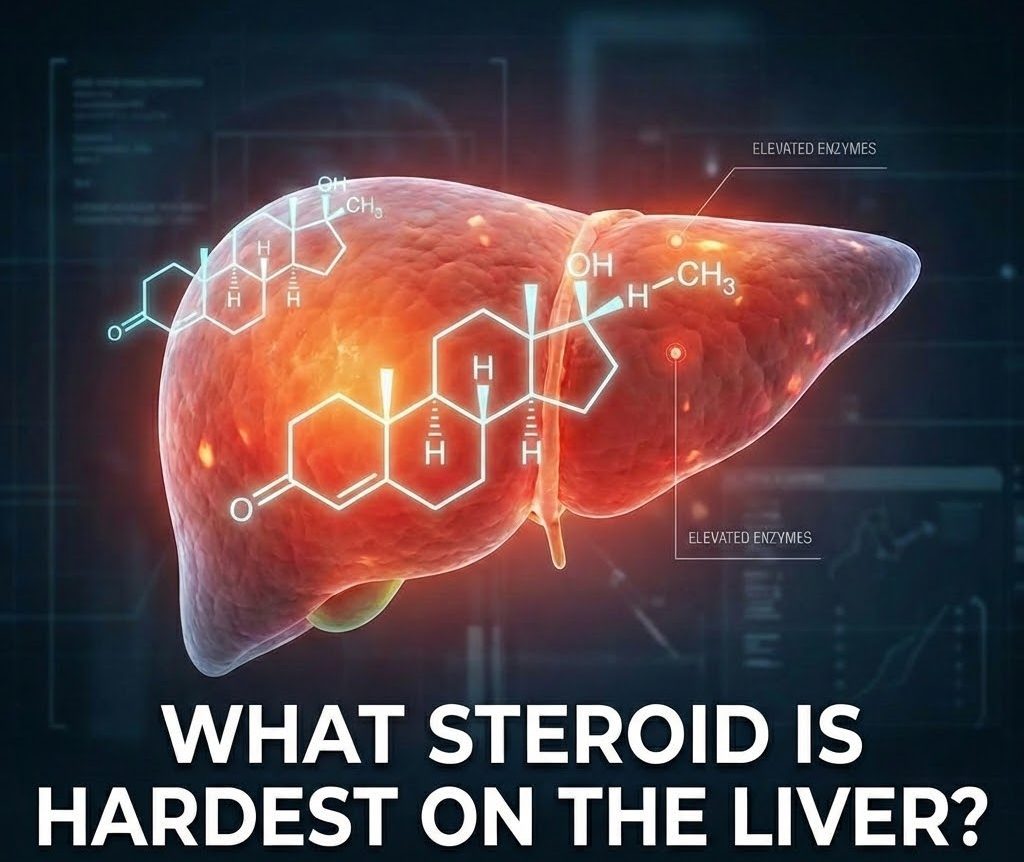
3D medical rendering of a human liver glowing with inflammation markers and overlaid with steroid chemical structures.

What Steroid Is Hardest on the Liver?

The liver is the body’s primary filtration system, responsible for metabolizing drugs, detoxifying blood, and synthesizing vital proteins. In the context of performance-enhancing drugs (PEDs), the liver is often the first organ to suffer significant damage.

When discussing Anabolic-Androgenic Steroids (AAS), the question “Which steroid is hardest on the liver?” is common. While individual responses vary based on genetics and existing health, certain compounds are chemically engineered in a way that makes them inherently more hepatotoxic than others.

To understand why some steroids destroy liver cells (hepatocytes) while others (like injectable testosterone) have minimal impact, we must first look at the chemistry of survival.

3D medical rendering of a human liver glowing with inflammation markers and overlaid with steroid chemical structures.
Metabolic stress visible: A visualization of how C-17 alpha-alkylated compounds cause inflammation and elevated enzymes within hepatic tissue.

The Mechanism: C-17 Alpha-Alkylation

Natural testosterone is quickly destroyed by the liver. If you were to swallow a pill of pure testosterone, the liver would break it down before it ever reached the bloodstream to exert an effect. This is known as the “first-pass metabolism.”

To bypass this defense mechanism, pharmaceutical chemists in the mid-20th century developed a process called C-17 Alpha-Alkylation (C17-aa). By adding an alkyl group (a methyl or ethyl group) to the 17th carbon position of the steroid molecule, the drug becomes resistant to hepatic breakdown.

This modification allows the steroid to survive the first pass through the liver and enter the bloodstream active. However, this survival comes at a steep price: the inability of the liver to break the substance down places immense metabolic stress on the organ. The steroid effectively acts as a cumulative toxin, causing inflammation, enzyme elevation, and potential cell death.

Almost all oral steroids (Dianabol, Anadrol, Winstrol) are C17-aa. However, among this group, a hierarchy of toxicity exists.

The Contenders for “Most Toxic”

While “toxicity” can be measured in different ways (mg per mg potency vs. total dosage load), three compounds consistently rank as the most destructive to hepatic health in medical literature and anecdotal case studies.

1. Fluoxymesterone (Halotestin)

If one were to identify the single harshest pharmaceutical-grade steroid on the liver, Halotestin is the frequent answer.

  • The Profile: Halotestin is an extremely potent androgen with very little anabolic (muscle-building) activity. It is primarily used in strength sports (powerlifting) or pre-contest bodybuilding to increase aggression and “hardness” without adding water weight.
  • The Toxicity: Halotestin is notorious because it impacts the liver severely even at very low dosages. While a user might take 50mg of Dianabol, a dose of just 10-20mg of Halotestin can cause a sharper spike in liver enzymes (ALT/AST). It is considered so toxic that clinical guidelines often limit its prescription use to very short windows, and it has largely fallen out of favor in general medicine.
  • The Consequence: Users often report rapid onset of lethargy and appetite suppression—early warning signs of liver strain—within days of starting use.

2. Methasterone (Superdrol)

Technically a “designer steroid,” Superdrol (Methyldrostanolone) was sold legally as a prohormone in the mid-2000s before being banned. Despite its legal past, it is widely regarded as one of the most hepatotoxic compounds ever sold.

  • The Profile: It is essentially an oral version of Masteron but with the C-17 modification. It creates massive, dry gains very quickly.
  • The Toxicity: Superdrol is infamous for causing cholestasis—a condition where the flow of bile from the liver stops. This leads to a buildup of bilirubin in the bloodstream, causing jaundice (yellowing of the skin and eyes). In the mid-2000s, emergency rooms saw a spike in young men with acute liver failure linked specifically to this compound.
  • The “MG” Factor: Like Halotestin, it is toxic at low doses. A “standard” dose of 10-20mg is often enough to elevate liver enzymes to dangerous levels within 2-3 weeks.

3. Oxymetholone (Anadrol)

Anadrol is often cited as the “king” of mass builders, but its reputation for liver damage is complex.

  • The Profile: Anadrol is used for adding sheer size and is arguably the most powerful oral for bulk.
  • The Toxicity Context: Unlike Halotestin or Superdrol, which are toxic mg-for-mg, Anadrol’s toxicity is often driven by the dosage size. Because Anadrol has a weak binding affinity, it is prescribed in massive doses compared to other steroids (50mg to 150mg per day).
  • The “Load” Theory: While the molecule itself might be slightly less toxic than Halotestin on a milligram basis, the fact that the liver must process 100mg of it daily (vs. 10mg of Halo) creates a massive metabolic burden. Long-term Anadrol use is strongly linked to Peliosis Hepatis (see below).

4. Methyl-Trienolone (Oral Trenbolone)

Though rarely seen and never medically approved for human use, Methyl-Trienolone deserves mention as perhaps the most toxic steroid conceptually. It is an oral version of Trenbolone. In clinical trials (for research), it was found to be so hepatotoxic that it was never released as a human drug. It is considered the absolute ceiling of liver toxicity, capable of causing jaundice in as little as a week.

Types of Liver Damage Caused by Steroids

It is important to understand that “liver damage” is not a single condition. Steroids cause specific pathologies.

1. Elevated Liver Enzymes (Transaminitis)

This is the most common and earliest sign. When liver cells are stressed or die, they leak enzymes (Alanine Transaminase [ALT] and Aspartate Transaminase [AST]) into the bloodstream.

  • What it means: High enzymes indicate inflammation. If the irritant (steroid) is removed, levels usually return to normal. If ignored, it leads to permanent scarring (cirrhosis).

2. Cholestasis

Common with Superdrol and Winstrol.

  • The Mechanism: The C17-aa steroids can inhibit the “bile salt export pump,” causing bile to stagnate in the liver rather than flowing into the digestive tract.
  • Symptoms: Intense itching (pruritus), dark urine, pale stools, and jaundice.

3. Peliosis Hepatis

This is a rare but potentially fatal condition strongly associated with Anadrol and long-term oral steroid use.

  • The Condition: Blood-filled cysts form within the liver tissue. Unlike solid tumors, these sacs are filled with blood.
  • The Danger: If these cysts rupture, they can cause catastrophic internal bleeding and liver failure.

4. Hepatic Adenomas

These are benign liver tumors. While not cancerous initially, they can grow large enough to rupture or, in rare cases, transform into Hepatocellular Carcinoma (liver cancer).

Why Injectables are Different

A common misconception is that all steroids hurt the liver. This is false.

Injectable bio-identical Testosterone (Cypionate, Enanthate) bypasses the first pass of the liver. It enters the bloodstream directly from the muscle tissue. While massive doses can cause minor stress, therapeutic or moderate doses of injectable testosterone generally have a negligible impact on liver values.

The danger arises almost exclusively when users introduce oral compounds or specific veterinary injectables (like Winstrol Depot) that are chemically structured to act like orals.

Infographic titled 'Hepatotoxicity Hierarchy' ranking the liver toxicity of steroids like Halotestin, Superdrol, and Anadrol versus Injectable Testosterone.
Understanding the hepatotoxicity hierarchy is crucial for risk management. This chart breaks down which compounds pose the highest “mg-for-mg” threat to liver function.

Harm Reduction and Medical Management

For those who choose to use these compounds despite the risks, harm reduction focuses on supporting the liver’s ability to filter toxins.

1. The “Zero Alcohol” Rule

Combining C17-aa steroids with alcohol is akin to pouring gasoline on a fire. Both compete for the same metabolic pathways. The combination exponentially increases the risk of acute liver failure.

2. Duration Limits

Clinical literature suggests that hepatotoxic agents should rarely be used for longer than 4 to 6 weeks. The popular “12-week oral cycle” is a recipe for severe cholestasis.

3. Supplementation (TUDCA & NAC)

  • TUDCA (Tauroursodeoxycholic Acid): This bile salt is the gold standard for cholestasis. It helps thin the bile and encourage flow, preventing the stagnation that leads to jaundice.
  • NAC (N-Acetyl Cysteine): As a precursor to glutathione, NAC helps replenish the liver’s antioxidant reserves, which are depleted by processing the steroid toxins.

4. Regular Blood Panels

You cannot “feel” liver enzymes rising until it is too late (jaundice). The only way to detect stress is through blood work monitoring ALT, AST, GGT, and Bilirubin levels.

Conclusion

When analyzing the hierarchy of hepatotoxicity, Halotestin and Superdrol generally claim the title for the most toxic compounds milligram-for-milligram, capable of causing rapid enzyme spikes and cholestasis. Anadrol follows closely due to the sheer volume of substance the liver must process.

However, the “hardest” steroid on the liver is ultimately the one taken without respect for physiology. Even milder compounds like Anavar (Oxandrolone) can cause damage if taken at high doses for months on end.

The liver is resilient and can regenerate, but it is not invincible. The physiological cost of oral anabolic steroids is a debt that must eventually be paid, often in the form of scarring, cysts, or chronic dysfunction. For this reason, the medical community universally advises against the non-therapeutic use of C17-alpha-alkylated androgens.

Product has been added to your cart
Compare (0)