

100% Secure Checkout Secure
Third-Party HPLC Tested HPLC Tested
Flat-style digital illustration with the title “How to Read and Apply a Peptide Dosage Chart” alongside a bar chart, calendar icon, and syringe, on a pastel blue and green background.

Peptide Dosage Charts

Peptides have gained tremendous attention in fitness, anti-aging, and wellness circles for their ability to enhance recovery, support muscle growth, improve skin health, and even promote better sleep. However, these benefits are only achieved when peptides are dosed correctly. Taking too little can reduce their effectiveness, while taking too much can increase the risk of side effects.

This is where peptide dosage charts come in. A dosage chart is your step-by-step reference for measuring and administering peptides safely. It converts the peptide’s weight in milligrams into the exact injection amount in milliliters (ml) or micrograms (mcg), so you always know exactly how much to take.

Why Peptide Dosage Charts Are Important

Without a chart, it’s easy to miscalculate peptide doses—especially since they are often supplied in lyophilized (freeze-dried) powder form that needs to be reconstituted before use. Here’s why dosage charts matter:

  • Precision – Ensures every injection is accurate.

  • Safety – Prevents overdosing that can cause unwanted effects.

  • Effectiveness – Delivers the optimal amount for maximum benefits.

  • Consistency – Helps maintain stable levels in the body.

  • Ease of Use – Removes guesswork from reconstitution and dosing.

Flat-style digital illustration with the title “How to Read and Apply a Peptide Dosage Chart” alongside a bar chart, calendar icon, and syringe, on a pastel blue and green background.


Guide to understanding and applying peptide dosage charts for safe and accurate peptide use.

How Peptide Dosage Charts Work

A peptide dosage chart provides clear guidance on:

  1. Reconstitution Ratios – How much bacteriostatic water to add to your peptide vial.

  2. Concentration Conversion – How many micrograms are in each fraction of a milliliter after mixing.

  3. Target Dosage – The correct amount to draw into your syringe based on your goal and protocol.

For example:
If you have a 5 mg vial of BPC 157 and add 2 ml of bacteriostatic water, each 0.1 ml on your insulin syringe equals 0.25 mg (250 mcg) of BPC 157. If your protocol calls for 500 mcg per dose, you would draw 0.2 ml.

Factors That Affect Peptide Dosage

Dosage isn’t one-size-fits-all. Several factors influence how much of a peptide you should take:

  • Peptide Type – Different peptides have different potency levels.

  • Purpose – Healing injuries, building muscle, improving sleep, or anti-aging will require different amounts.

  • Experience Level – Beginners often start with the lower end of the range.

  • Body Weight – Larger individuals may need slightly higher doses.

  • Stacking – Combining multiple peptides can change the ideal dose of each.

Sample Peptide Dosage Chart

Here’s an example chart for some of the most common research peptides:

Peptide NameTypical DosageFrequencyCycle LengthNotes
BPC 157200–500 mcg1–2x daily4–6 weeksUsed for injury recovery and gut health
TB-5002–2.5 mg2x weekly4–6 weeksOften stacked with BPC 157 for faster healing
GHK-Cu2–5 mg (topical/injectable)Daily (topical)OngoingPromotes collagen and hair growth
DSIP100–200 mcgOnce before bed4–8 weeksSupports deeper sleep cycles
RetatrutideFollow specific protocolWeeklyVariesResearching metabolic and weight loss benefits

How to Read and Apply a Peptide Dosage Chart

A dosage chart will usually include:

  • Vial Size (mg) – Amount of peptide powder in the vial.

  • Reconstitution Volume (ml) – How much bacteriostatic water to add.

  • Dose Amount (mcg) – The desired amount per injection.

  • Injection Volume (ml) – How much to draw into the syringe to achieve the desired dose.

Flat-style digital illustration with the title “How to Read and Apply a Peptide Dosage Chart” alongside a bar chart, calendar icon, and syringe, on a pastel blue and green background.


Guide to understanding and applying peptide dosage charts for safe and accurate peptide use.

Example:

  • Vial: 10 mg peptide

  • Add: 4 ml bacteriostatic water

  • Desired dose: 500 mcg

  • Chart result: Draw 0.2 ml for each dose.

Creating Your Own Peptide Dosage Chart

If your peptide doesn’t come with a chart, you can make one yourself by following these steps:

  1. Determine Total Peptide Amount – Check the label for mg in the vial.

  2. Choose Reconstitution Volume – Decide how much bacteriostatic water to add.

  3. Calculate Concentration – Divide total mg by total ml to find mg/ml.

  4. Convert to Micrograms – Multiply mg by 1,000 to get mcg.

  5. Figure Out Injection Volume – Divide the desired mcg dose by the mcg per ml.

Avoiding Common Dosage Mistakes

Even experienced users can make errors without a chart. Here are some common mistakes to avoid:

  • Guessing Instead of Measuring – Always use a syringe with clear ml markings.

  • Wrong Water Amount – Adding too much or too little bacteriostatic water changes the concentration.

  • Skipping the Chart – Relying on memory often leads to dosing errors.

  • Mixing Units – Confusing mg and mcg can result in taking 1,000 times the intended dose.

  • Not Accounting for Loss – Small amounts may remain in the syringe; dosage charts often factor this in.

Safe Administration Guidelines

Using a dosage chart is only part of safe peptide use. You should also:

  • Use bacteriostatic water for reconstitution to prevent contamination.

  • Store peptides correctly—usually refrigerated after mixing.

  • Rotate injection sites to avoid irritation.

  • Follow cycle guidelines and take breaks between cycles.

  • Track your doses in a journal or app.

Peptide Dosage Chart for Healing and Recovery

Some peptides are specifically used for injury recovery and tissue repair. Here’s a focused chart for healing purposes:

Peptide CombinationBPC 157 DoseTB-500 DoseFrequencyCycle LengthNotes
BPC 157 + TB-500250 mcg2 mgDaily / 2x weekly4–6 weeksSpeeds up muscle, tendon, and ligament repair

Peptide Dosage Chart for Performance and Muscle Growth

Athletes often use peptides to enhance training results. Below is a sample chart:

Peptide NameTypical DosageFrequencyCycle LengthNotes
Ipamorelin100–200 mcg1–3x daily8–12 weeksStimulates growth hormone release
CJC-1295 (DAC)2 mgOnce weekly12 weeksPromotes sustained GH release

Peptide Dosage Chart for Anti-Aging and Wellness

For anti-aging protocols, dosages tend to be lower but more consistent over time:

Peptide NameTypical DosageFrequencyCycle LengthNotes
GHK-Cu2–5 mgDailyOngoingCollagen support and skin rejuvenation
Epithalon5–10 mgDaily10–20 daysPotential longevity benefits

The Role of Peptide Dosage Calculators

While charts are useful, many people use peptide dosage calculators to confirm their math. These online tools quickly convert vial size and water volume into the exact ml to draw per dose. A calculator paired with a chart ensures 100% accuracy.

Final Tips for Using Peptide Dosage Charts

  1. Always double-check your math when reconstituting.

  2. Print or save your chart for quick reference.

  3. Adjust doses gradually if increasing, rather than making big jumps.

  4. Stay within recommended cycles to minimize side effects.

  5. Consult a professional if unsure about your protocol.

Conclusion

A peptide dosage chart is an essential tool for anyone using peptides for performance, recovery, or wellness. It removes guesswork, ensures accurate dosing, and helps you get the most out of your investment in these powerful compounds. Whether you’re using BPC 157 for injury repair, DSIP for sleep, or GHK-Cu for skin health, pairing your peptide with a clear, accurate dosage chart will maximise safety and results.

Bottle labeled “Winstrol 10 mg Tablets” beside a blister pack labeled “Anavar 10 mg,” with large text reading “Winstrol vs Anavar.”

Winstrol vs Anavar

When lifters talk about cutting steroids, the debate inevitably becomes winstrol vs anavar. Both compounds are famed for helping athletes look sharper on stage or at the beach, but they’re not interchangeable. Each has distinct strengths, side-effect profiles, and ideal use cases. This guide breaks down anavar vs winstrol in plain language so you can make an informed decision for your goals. When you’re ready to explore legitimate, lab-tested products with discreet Canadian shipping, start at Forged Pharma.

Quick Definitions

Anavar (Oxandrolone) is an oral DHT-derived anabolic known for mild anabolic action, low aromatization, and a reputation for being more forgiving than many orals. It has a long track record in medical settings for muscle-wasting, burn recovery, and convalescence at conservative doses.

Winstrol (Stanozolol) is also a DHT-derived oral (and sometimes injectable) anabolic that’s distinctly drier and often considered more aggressive. Users chase its hard, grainy look and strength upticks during caloric deficits.

Both fall under the umbrella of steroids winstrol/anavar and are considered cutting agents because they don’t convert to estrogen. That means minimal bloat, a cosmetic edge when you’re already lean, and a feel that many athletes prefer late in a diet. Quality and dosing matter; for vetted options, check Forged Pharma.

Mechanisms in Plain English

  • No aromatization: Neither drug converts to estrogen. The upside is less water retention. The downside is potential joint dryness and lipid strain, especially with Winstrol.
  • Androgen receptor activity: Both bind AR and support lean mass retention during a deficit. Winstrol generally feels more aggressive in strength/drive; Anavar feels more polished and steady.
  • Nutrient partitioning: Users often report better training quality and a slightly easier time keeping strength while calories are low.
Bottle labeled “Winstrol 10 mg Tablets” beside a blister pack labeled “Anavar 10 mg,” with large text reading “Winstrol vs Anavar.”
Winstrol vs Anavar: side-by-side visual of common oral formats and strengths.

Winstrol vs Anavar: Head-to-Head

The following sections reflect typical user experiences and commonly reported outcomes. Individual responses vary widely.

1) Look and Conditioning

If you’re already fairly lean, Winstrol can deliver an exceptionally dry, crisp look—veins, striations, and a “granite” finish. It’s why many competitors reach for it in the final stretch of a prep. Anavar also produces a clean, tight look but with a slightly fuller quality and less joint dryness for many.

Bottom line: If “etched” is the target, Winstrol usually wins. If you want polished hardness without feeling brittle, Anavar often feels better.

2) Strength in a Deficit

Both help you hold or bump strength while cutting. Many athletes note Winstrol brings a sharper strength pop; Anavar offers steadier, cleaner performance with better pumps and endurance.

3) “Winstrol vs Anavar” for Fat Loss

Neither steroid burns fat directly. Fat loss happens because you’re in a caloric deficit. These compounds support a leaner look by preserving muscle, improving training quality, and reducing water retention. For searchers of winstrol vs anavar fat loss or anavar vs winstrol for fat loss, the honest answer is: choose the one you tolerate best while sticking to your diet and cardio. Anavar is often easier to run longer with fewer comfort issues; Winstrol may appear to work faster because of its ultra-dry cosmetic effect.

4) Side-Effect Profiles

  • Liver stress: Both are 17-aa orals and can elevate liver enzymes. Responsible cycle length and bloodwork are smart.
  • Lipids: Winstrol is notorious for unfavorable HDL/LDL shifts; Anavar usually impacts lipids too, but tends to be milder.
  • Joints/tendons: Winstrol is more frequently associated with joint dryness and tendon grumpiness in lean, high-volume phases. Anavar is usually kinder.
  • Blood pressure/pumps: Either can influence BP; Anavar’s “pumpier” feel sometimes nudges blood pressure temporarily.

If minimizing discomfort is your priority, Anavar typically has the gentler reputation. For higher-impact hardness with a greater risk of dryness and lipid strain, Winstrol is the heavier hitter. Source quality matters—poorly made orals magnify every risk. Stick to reliable suppliers such as Forged Pharma.

Who Should Consider Which?

  • Lifestyle cut with work and family demands: Anavar is easier to live with. You’ll likely feel normal, train well, and keep joints happier.
  • Stage photoshoot, beach-trip deadline, ultra-dry goal: Winstrol’s crispness is hard to match when you’re already lean.
  • Returning lifter after time off: Anavar can be a gentle re-entry because it’s more forgiving on comfort and training feel.
  • Strength athlete wanting pop while cutting: Winstrol often delivers that punch—just watch joints and tendons.

For any route, use reputable product lines and consistent shipping inside Canada via Forged Pharma.

Dosage & Cycle Length (Educational Overview)

Actual dosing is personal and should consider labs, age, training history, and tolerance. The below reflects typical reported ranges, not medical advice.

Anavar (Oxandrolone)

  • Common range: 20–60 mg/day split AM/PM
  • Typical length: 6–8 weeks
  • Notes: Many feel great around 30–40 mg/day with robust training quality and manageable sides.

Winstrol (Stanozolol)

  • Oral common range: 25–50 mg/day
  • Injectable version exists; frequency depends on ester/form.
  • Typical length: 4–6 weeks for oral use late in a cut
  • Notes: Watch joint feedback and lipids closely.

Where availability and quality are reliable, purchase through Forged Pharma.

“Anavar for Women”: Special Considerations

Search interest around anavar for women is high because Anavar has a comparatively favorable profile among female athletes at very conservative doses. Even then, women should be cautious and well-informed about virilization risks (voice, hair, skin). Many female users keep cycles short and doses low to emphasize strength retention and tightness without undue risk. Winstrol is generally a much riskier choice for women.

If you’re evaluating options and want consistent product sourcing in Canada, start at Forged Pharma.

“Winstrol Anavar Cycle”: How Users Structure a Cut

People commonly run either Anavar or Winstrol. Some advanced users rotate them in separate blocks within a single cut—not simultaneously—to manage cumulative stress (liver, lipids, joints). A typical arc might look like:

  • Phase 1 (8–10 weeks out): Anavar at a moderate dose while dialing in food, steps, and cardio.
  • Phase 2 (final 4–6 weeks): Swap to Winstrol to sharpen and dry out if joints tolerate it.

This approach leverages Anavar’s everyday comfort and Winstrol’s last-minute crispness. If you try any variation of a winstrol anavar cycle, keep labs, blood pressure, and joint feedback center stage. Quality sourcing reduces guesswork—see Forged Pharma.

Training, Nutrition, and Recovery Still Decide the Winner

It’s tempting to obsess over anavar vs winstrol, but the real drivers of your look are calories, protein, training, steps, and sleep. The drugs help you keep muscle and sharpen the finish, but the basics dictate progress.

  • Calories & protein: Plan a modest deficit; anchor meals with protein and produce to keep appetite tamed.
  • Steps & cardio: Daily movement keeps the engine humming, especially late in a cut.
  • Strength work: Keep loads heavy enough to signal “keep this muscle.”
  • Sleep & stress control: Poor sleep blurs the cosmetic effect and worsens side effects.

With the basics in place, the choice of winstrol vs anavar becomes a finishing tool—not a miracle cure. When you’re ready to run a disciplined plan with dependable products, shop Forged Pharma.

Common Questions People Ask (including “anavar vs winstrol reddit” threads)

Does Winstrol burn more fat than Anavar?
Neither burns fat directly. Winstrol can look leaner because it sheds water and gives a crisper finish. Anavar often feels easier to run longer and helps maintain training drive, which indirectly supports fat loss.

Which is safer?
“Safer” depends on context, but Anavar tends to be better tolerated for more people at moderate doses. Winstrol often hits lipids harder and can be rougher on joints.

What about pumps and performance?
Anavar commonly gives fuller pumps and stable training quality. Winstrol yields a drier, more aggressive feel; some love it, others feel beat up on it.

What’s the best steroid to lose fat?
The best “fat-loss steroid” is consistent nutrition and training. If you’re already committed, choose the tool you tolerate that complements your goal: Anavar for comfort and performance, Winstrol for maximal dryness when you’re already lean. For legitimate products in Canada, visit Forged Pharma.

Can I take both at once?
Some advanced users rotate rather than stack, to manage liver and lipid stress. Stacking two orals raises risk without guaranteeing a superior look. Choose one, run it well, and keep variables minimal.

Pink round tablets on the left and white oblong tablets on the right with “Winstrol vs Anavar” text over a dark background.
Visual contrast of tablet shapes for a Winstrol vs Anavar comparison feature.

Practical Takeaways

  • If your joints hate you and your cholesterol runs sensitive, lean Anavar. You’ll likely feel better, train better, and preserve muscle without feeling overly dry.
  • If you’re stage-lean and want that last 5% of crispness, Winstrol is tough to beat. Just monitor joints, tendon health, and lipids closely.
  • If you’re new to cuts, get food, steps, and training right first. Then add one compound at a time so you can actually assess what helps.
  • Use trusted sources. Unknown brands magnify side effects and waste money. For Canadian customers wanting dependable shipping and support, use Forged Pharma.

Final Verdict: Winstrol vs Anavar

The “winner” depends on your priorities:

  • Choose Anavar if you want a smoother cut, steady training, and a professional finish that’s easier to live with.
  • Choose Winstrol if you are already lean and chasing the driest, crispiest stage-ready look, and your joints and labs tolerate it.

Whichever path you take, keep cycles reasonable, run bloodwork, and make your basics bulletproof. When you’re ready to move forward with high-quality options and discreet Canadian fulfillment, head to Forged Pharma.

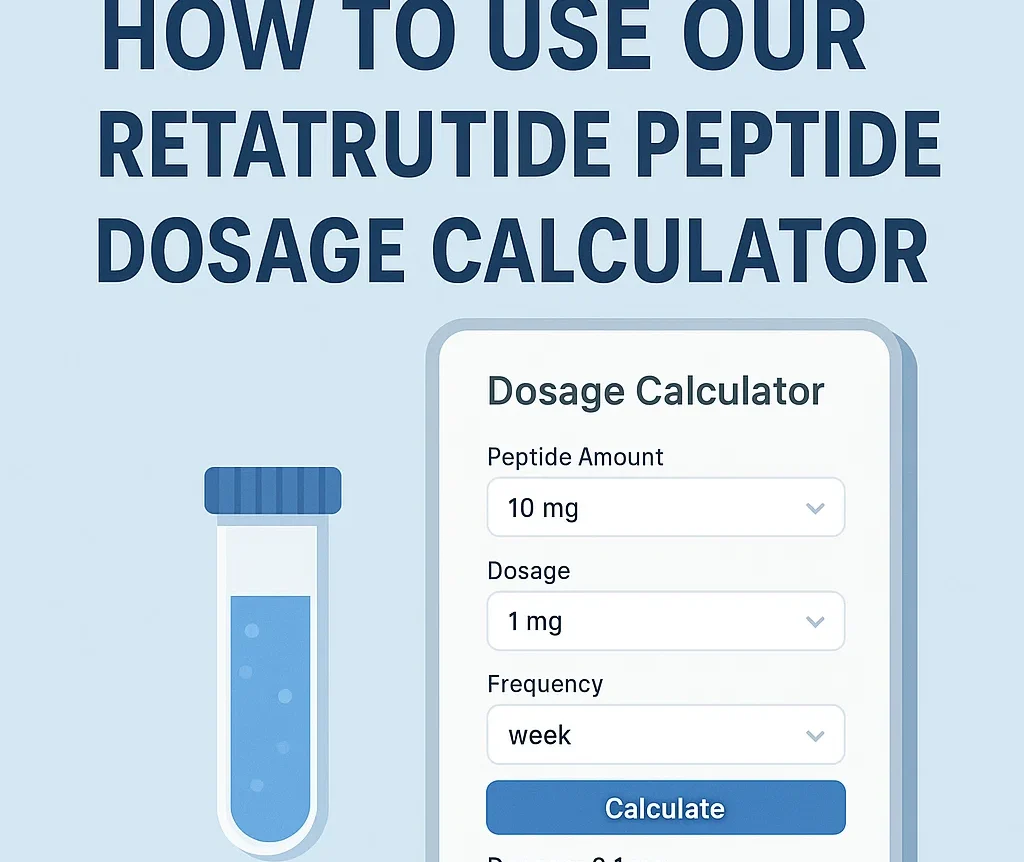
Illustration with the headline “How to Use Our Retatrutide Peptide Dosage Calculator,” showing a test tube and a calculator card with fields for peptide amount, dosage, and frequency.

How to Use the Retatrutide Peptide Dosage Calculator

Whether you’re preparing your first research vial or tightening up a running protocol, the Retatrutide Peptide Dosage Calculator is designed to remove guesswork. It converts what’s on the label (milligrams in the vial) and what you add (milliliters of bacteriostatic water) into a precise draw volume on a standard insulin syringe—plus it shows the exact tick mark to pull to.

Below is a complete walkthrough of the calculator’s inputs, what the output means, how the math works behind the scenes, and practical tips to avoid common mistakes. You can find research-grade peptides and supplies with discreet domestic shipping at Forged Pharma.

What the Calculator Does (in plain English)

Retatrutide is measured by mass (mg) in the vial and often micrograms (mcg) per dose. After you reconstitute the vial with bacteriostatic (BAC) water, you’ll draw a volume (ml) into a syringe. Our calculator bridges those units:

  1. It converts mg in the vial and ml of BAC water into a concentration (mcg per ml).

  2. It converts your target mcg dose into the exact ml to draw.

  3. It maps that milliliter amount to the tick marks on your syringe and tells you precisely where to stop pulling.

No more translating mcg to ml in your head. No more second-guessing where “0.02 ml” actually sits on a 0.3 ml syringe.

Illustration with the headline “How to Use Our Retatrutide Peptide Dosage Calculator,” showing a test tube and a calculator card with fields for peptide amount, dosage, and frequency.

Retatrutide calculator inputs at a glance: set amount, dosage, and frequency, then calculate your draw.

A Quick Tour of the Interface

(Refer to the screenshot you provided—your calculator will look the same.)

Inputs:

  • Total Syringe Volume (ml) – Choose the insulin syringe size you’re using (commonly 0.3 ml, 0.5 ml, or 1.0 ml).

  • Peptide Concentration in Vial (mg) – Choose the vial strength you bought (e.g., 5 mg).

  • Volume of BAC Water You Want to Add (ml) – Select how much sterile diluent you’ll add to the vial (e.g., 1 ml or 2 ml).

  • Target Peptide Dose (mcg) – Enter the amount you wish to administer per dose (for example, 100 mcg).

Output:

  • A sentence telling you where to draw to (e.g., “For a 100 mcg dose, draw up to tick mark 2.”).

  • A ruler graphic of your syringe face with a shaded block under the correct tick so you can visually confirm.

Why the Tick Mark Matters

Insulin syringes are tiny and precise. The 0.3 ml model has 30 small tick marks (each tick = 0.01 ml). When dosing peptides like retatrutide, accurate micro-volumes are crucial. The calculator’s visual cue prevents under- or overdrawing, which is especially helpful when you’re splitting micro-doses across a week.

The Fastest Way to Use the Calculator (Start-to-Finish)

  1. Pick the syringe you actually hold in your hand. If you use a 0.3 ml insulin syringe, select 0.3 ml in Total Syringe Volume.

  2. Select the vial strength you purchased. If your vial says 5 mg retatrutide, pick 5 mg.

  3. Select how much BAC water you’ll add. Many users add 1 ml for a stronger concentration or 2 ml for a slightly larger, easier-to-see draw. Choose the volume you truly intend to add.

  4. Type your target dose in mcg. For example, 100 mcg.

  5. Read the output. The calculator will tell you exactly which tick to draw to and highlight that position on the syringe scale.

That’s it. You now have a repeatable draw for every dose in your current vial.

Worked Example

  • Syringe: 0.3 ml

  • Vial strength: 5 mg

  • BAC water added: 1 ml

  • Target dose: 100 mcg

What the calculator shows: “For a 100 mcg dose, draw up to tick mark 2.”

Why:

  • 5 mg reconstituted with 1 ml = 5 mg/ml = 5000 mcg/ml.

  • 100 mcg ÷ 5000 mcg/ml = 0.02 ml.

  • On a 0.3 ml syringe, each tick is 0.01 ml → 0.02 ml = tick 2.

The tool does this automatically and presents the tick visually so you can double-check before you draw.

What If You Choose a Different BAC Water Volume?

The draw length changes with dilution. Here’s how the calculator responds if you add 2 ml instead of 1 ml to the same 5 mg retatrutide vial:

  • 5 mg in 2 ml = 2.5 mg/ml = 2500 mcg/ml

  • 100 mcg ÷ 2500 mcg/ml = 0.04 ml

  • On a 0.3 ml syringe: 0.04 ml = tick mark 4

The calculator updates the tick automatically the moment you change the BAC water drop-down. Choose the volume that best fits your eyesight, your syringe size, and how often you’ll dose.

Choosing Your Dilution: When to Use 1 ml vs. 2 ml

1 ml BAC water

  • Produces a stronger concentration (shorter draw).

  • Nice when you prefer very small pulls and you’re comfortable reading tiny tick distances.

2 ml BAC water

  • Produces a weaker concentration (longer draw).

  • Helpful if your target dose is tiny (e.g., 50–100 mcg) and you’d rather pull to tick 4–8 instead of 1–2.

  • A longer draw can be easier to see and repeat accurately.

There’s no universal “best.” The calculator lets you preview both and pick what suits your eyes and your syringes.

Common Mistakes the Calculator Helps You Avoid

  • Mixing mg and mcg. The tool expects Target Dose in mcg. If you accidentally type 0.1 believing it means 100 mcg, you’ll get a way-too-small draw.

  • Forgetting what you actually added. If you told the calculator 1 ml but you added 2 ml to the vial, your draw will be off by 2×. Always set the drop-down to what you really added.

  • Using a different syringe than selected. If you pull on a 1.0 ml syringe but selected 0.3 ml in the calculator, the tick numbers won’t match the plastic in your hand.

  • Shaking the vial hard. That can foam and denature delicate peptides. Add BAC water slowly against the glass and roll gently to dissolve.

  • Drawing to the wrong tick under pressure. The ruler graphic in the app is there to slow you down and force a visual confirmation. Two seconds here save you from a week of inconsistent dosing.

Advanced Example: Micro-Doses and Split Doses

Let’s say your plan calls for 70 mcg of retatrutide once daily. Your vial is 5 mg, and you added 2 ml BAC water:

  • Concentration = 5 mg / 2 ml = 2.5 mg/ml = 2500 mcg/ml

  • Draw = 70 ÷ 2500 = 0.028 ml

  • On a 0.3 ml syringe, that’s tick 2.8. The calculator rounds to the nearest readable tick and shows you the position on the scale.

If you prefer symmetry, you could set Target Dose to 140 mcg and split into two equal 70 mcg half-doses—the tool will show 0.056 ml (tick 5.6) for the combined amount, making it easy to halve visually.

Why We Include the Syringe Size Drop-Down

Not everyone uses a 0.3 ml insulin syringe. Pharmacies often stock 0.5 ml and 1.0 ml as well. Because each syringe prints ticks differently, the calculator maps your draw to the correct ruler:

  • 0.3 ml (30-unit): 30 ticks, each 0.01 ml

  • 0.5 ml (50-unit): 50 ticks, each 0.01 ml

  • 1.0 ml (100-unit): 100 ticks, each 0.01 ml

Pick the syringe you truly use so the graphics and the “tick mark X” instruction match.

Practical Handling Tips (General Information)

  • Keep it clean. Alcohol swab the stopper, use new needles to draw, and store used sharps safely.

  • Label the vial. Write the reconstitution date and BAC volume used so you never wonder which dilution you made.

  • Refrigerate after mixing unless your vendor’s product notes say otherwise.

  • Log your doses. Even with a calculator, a simple notebook or notes app helps you track consistency.

For dependable vials and supplies shipped discreetly within Canada, go to Forged Pharma.

Troubleshooting: When Numbers Don’t Make Sense

“The tick looks too small to pull accurately.” Increase your BAC water volume from 1 ml to 2 ml so your draw length doubles. The calculator will immediately show a larger tick number.

“I changed one input and everything moved.” That’s expected. Concentration is a ratio. Changing vial strength, BAC volume, syringe size, or target dose changes the required draw.

“I think I mis-dosed last time.” Confirm your BAC volume, confirm your vial strength, set those in the calculator, and re-check the target dose. When in doubt, discard questionable pulls and start fresh. Peptides are too precise to wing it.

Dark-blue illustration with a syringe and a tablet screen titled “Peptide Dosage Calculator,” showing fields for peptide amount (5 mg), solution volume (2 mL), and dosage (0.1 mg).

From mg and mL to draw volume: the Retatrutide calculator converts your numbers into a clear syringe target.

Why Use a Calculator for Retatrutide at All?

Retatrutide protocols often involve microgram-level precision. Even experienced users misread a 0.3 ml syringe now and then—especially when rushing. The calculator:

  • removes the mental math,

  • shows a visual tick, and

  • makes it easy to repeat the exact draw day after day.

Consistency is what lets you evaluate how you actually respond.

A Few More Examples (So You Can Sanity-Check Any Setup)

Example A: Strong dilution (short draw)

  • Vial: 5 mg

  • BAC water: 1 ml

  • Target dose: 50 mcg

  • Concentration: 5000 mcg/ml

  • Draw: 50 / 5000 = 0.01 mltick 1 on a 0.3 ml syringe

Example B: Easier-to-see draw

  • Vial: 5 mg

  • BAC water: 2 ml

  • Target dose: 50 mcg

  • Concentration: 2500 mcg/ml

  • Draw: 50 / 2500 = 0.02 mltick 2

Example C: Larger daily dose

  • Vial: 5 mg

  • BAC water: 2 ml

  • Target dose: 250 mcg

  • Draw: 250 / 2500 = 0.10 mltick 10

You can replicate any of these scenarios inside the calculator and see the identical tick callouts.

When to Mix a New Vial

Most users prepare only as much as they expect to use within the typical storage window recommended by the vendor. If you’re running a short block, a 2 mg vial may be plenty. If you’re planning a longer phase or splitting doses across sites, a 5 mg vial can be convenient. In both cases, label the vial and refrigerate after reconstitution. For current vial sizes and availability, check Forged Pharma.

Final Checklist Before Each Draw

  • Confirm the syringe size matches the calculator setting.

  • Verify the BAC volume you actually added to the vial.

  • Enter your target mcg dose.

  • Read the calculator’s line: “Draw up to tick mark X.”

  • Match the shaded tick on the ruler to your syringe face, then draw slowly to that mark.

Two calm breaths and ten seconds with the calculator will save you from inconsistent dosing for the rest of the vial.

The Bottom Line

Retatrutide dosing is simple when the math is handled for you. The Retatrutide Peptide Dosage Calculator translates mg, ml, and mcg into a single instruction you can trust: draw to tick mark X. Use it to preview different dilutions, pick the syringe size you actually use, and standardize your protocol from the first dose to the last.

For research-grade vials, supplies, and discreet Canadian shipping, start with Forged Pharma—and let the calculator do the heavy lifting every time you prepare a dose.

Product has been added to your cart
Compare (0)